McKeown Medical
167 Bath Street, Glasgow, G2 4SQ
McKeown Medical
167 Bath Street, Glasgow, G2 4SQ
Discover what ‘True Skin Age’ means, how it’s measured using VISIA, and the evidence-based ways to improve your biological skin age.
Published by Dr Darren McKeown
Date posted — 2.02.26
It is common for patients to know their chronological age, but very few know their biological skin age. In aesthetic medicine, these two numbers often don’t match.
Thanks to modern imaging systems like VISIA®, we can now estimate ‘True Skin Age’, a measure of how your skin is ageing relative to people of the same age and skin type.
Patients find this incredibly useful because it provides:
A baseline
A motivation marker
A treatment response tracker
An objective way to measure improvement
In this article, we break down what ‘True Skin Age’ means and how to lower it over time.
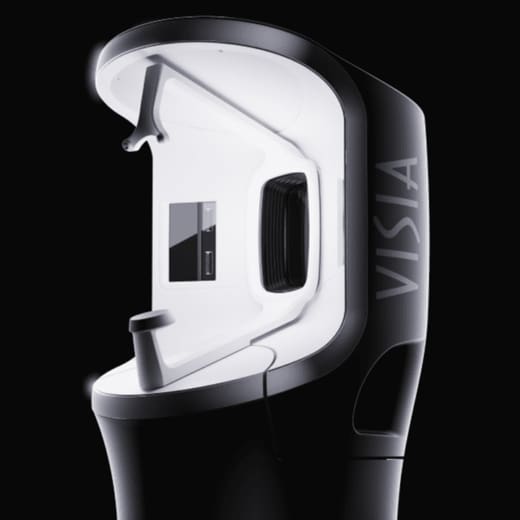
‘True Skin Age’ is a data-driven score generated by VISIA that compares your skin to a large global database of individuals of the same gender and age group. It takes into account markers such as:
UV damage
Pigmentation
Redness
Texture and pores
Collagen-related ageing
Porphyrins/bacteria
Fine lines and wrinkles
This score can be:
Younger than your chronological age
Equal to your chronological age
Older than your chronological age
Patients instantly grasp the concept, and are motivated to improve it.
Several external and internal factors accelerate skin ageing:
Sun and blue light drive:
Pigmentation
Collagen breakdown
Vascular damage
Actinic changes
This is the biggest modifiable determinant of skin age.
Both increase oxidative stress and impair circulation.
Oestrogen decline, thyroid disorders and diabetes can all alter skin physiology.
Chronic inflammation accelerates collagen loss and pigment formation.
Some individuals simply age more slowly or faster due to inherent biology.
Sleep, stress, alcohol and nutrition meaningfully influence:
Hydration
Barrier integrity
Collagen turnover
Understanding these drivers helps patients prioritise interventions.

The VISIA system uses:
Multispectral imaging
RBX® technology for pigment/redness isolation
UV photography
Texture mapping
Pore analysis
Comparative population data
The software then assigns a biological skin age relative to peers.
This forms a baseline, enabling patients to measure change over time.
Here are the most evidence-based strategies:
UV drives pigmentation, redness, and collagen breakdown, so improving UV-related markers makes skin appear younger.
This may involve:
Pigmentation laser (for brown spots)
Vascular laser (for redness)
IPL/BBL (for photoageing)
Antioxidant serums (to reduce oxidative stress)
Broad spectrum SPF (daily)
Collagen density strongly influences biological skin age.
Clinically effective ways to stimulate collagen include:
Fractional resurfacing lasers
Non-ablative collagen-stimulating lasers
Full resurfacing lasers
Retinoids (topically)
Peptides (supporting mechanism)
VISIA’s wrinkle/texture metrics are particularly responsive to collagen treatments.
Uneven pigmentation adds years to perceived age. Strategies include:
Hydroquinone (short-term cycles if appropriate)
Tranexamic acid (melasma/PIH)
Laser/light therapy
Topical retinoids
Barrier repair for inflammation-driven PIH
Pigment reduction is one of the fastest ways to make skin look younger.
Diffuse redness is strongly associated with inflammatory ageing.
Vascular improvements typically involve:
Vascular lasers
IPL/BBL
Anti-inflammatory skincare
Trigger management (alcohol, heat, sun, stress)
Reducing redness improves clarity and uniformity, two strong youth markers.
Maintenance therapy matters. Important categories include:
Retinoids (cell turnover & collagen)
Vitamin C (antioxidant support)
Niacinamide (barrier & pigment suppression)
Peptides (signalling pathways)
Sunscreen (non-negotiable)
This protects investment in clinical treatments.
The real power of measuring skin age is proof of change.
Patients who re-test after 3–12 months typically see measurable improvements in:
UV damage scores
Pigment evenness
Redness
Texture
Biological age
This creates a gratifying feedback loop that sustains motivation.
While VISIA focuses on facial skin analysis, it is important to recognise that ageing affects the entire body, not just the face. Many patients also notice changes in areas such as the neck, chest, hands, and upper arms, where skin quality, tone, and elasticity can gradually decline over time.
For concerns like skin laxity or uneven texture in these areas, treatment options may include non-surgical approaches such as light-based therapies and body contouring, or surgical procedures, depending on the degree of change. For example, concerns such as ‘bingo wings’ can be addressed with treatments like CoolSculpting® and SkinTyte™, or upper arm lift surgery when more significant tightening is required.
Addressing both facial and body concerns as part of a comprehensive plan helps create more balanced, natural-looking results overall.
‘True Skin Age’ gives patients a meaningful framework for understanding their skin’s health and ageing trajectory. By combining objective measurement with targeted clinical treatments and sensible skincare, it is possible not just to look younger, but to biologically age more slowly at the level of the skin.
To book your VISIA skin assessment, call us on 0141 570 0309 or complete our simple online consultation.
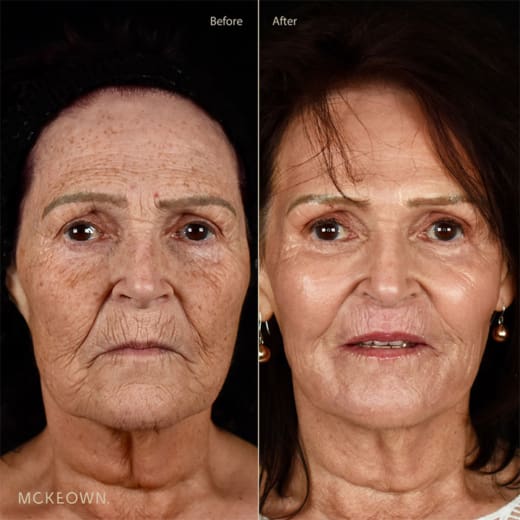
Skin quality is the missing piece in aesthetic medicine. Discover why tone, texture and clarity matter—and how lasers and VISIA...
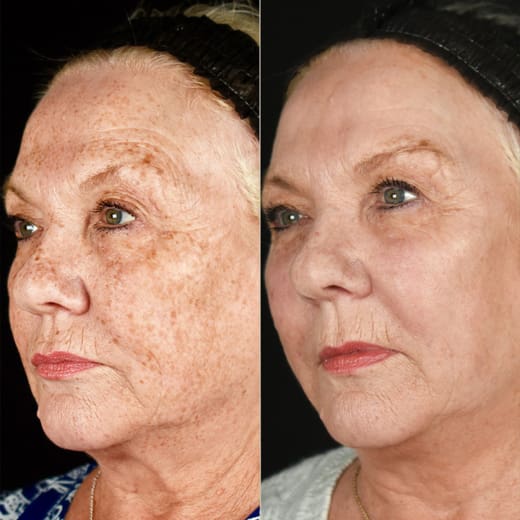
Pigmentation, redness and texture issues all have different causes. Learn what’s happening beneath the skin, and why VISIA analysis helps...
1 / 2
2 / 2
Skin quality is the missing piece in aesthetic medicine. Discover why tone, texture and clarity matter—and how lasers and VISIA...
Pigmentation, redness and texture issues all have different causes. Learn what’s happening beneath the skin, and why VISIA analysis helps...
Thank you to this lovely patient for allowing us to share her results.
Varicose veins are something we see a lot of in the clinic, and they can have a real impact beyond how they simply look - aching, heaviness and discomfort are common reasons for patients deciding to come and get them fixed. Now that summer is approaching, this our peak time of year for patients coming to look for a fix.
This patient was treated by the wonderful Dr Alex Vesey using a combination of Radiofrequency Ablation (RFA) and microphlebectomy. RFA works by delivering targeted heat energy to close off the affected vein from the inside, while microphlebectomy allows the smaller surface veins to be removed through tiny incisions. Together, they address both the underlying cause and the visible result. Both procedures are done under local anaesthetic, which means you can get up and walk out immediately after surgery.
The patient is absolutely delighted with her outcome. What do you think?

Hey everyone! We’ve had loads of people messaging asking about the Quantum Lift and I wanted to make this video to give you so more details.
Totally non-invasive procedure for skin tightening - like Sofwave - are a huge part of what we do in the clinic. We also do a lot of deep plane face and neck lifts, which are the gold standard way to improve the jawline and neck.
But there is a big group of patients who need more than Sofwave, but aren’t ready for surgery. Or do need surgery, but don’t want to commit to the expense or invasiveness of surgery. These are the patients The Quantum Lift is for.
Let us know what you think in the comments below. And if you have any questions, send a pic by DM or email and we can give you an opinion 😍
Quantum Liposuction! I am SUPER excited to let you know we will be the first in Scotland to offer what is now regarded internationally as the new gold standard technique in liposuction.
We are making a big investment to bring a whole range of cutting edge technology to the clinic to allow us to take our liposuction and body contouring work to the next level.
First we melt the fat using ultrasound. Next we use power assisted liposuction to remove the fat. Finally, we use Quantum RF to tighten the skin. Quantum RF is the new innovation that is taking the body contouring world by storm. It’s an excellent option for patients who need more than a bit of liposuction, but aren’t quite ready for full tummy tuck or arm lift or thigh lift.
Dr Kavita will be doing all of the body contouring procedures under sedation, which means you will be asleep throughout. I will also be using the technology to help shape the jawline and chin and lift the jowls. You can read more about the treatment at the link in our bio.
Let us know what you think in the comments below!
Let`s talk about Mounjaro / Ozempic face!
It feels like everyone is on weight loss drugs right now, and they`re incredible for transforming bodies and health, but rapid weight loss has a real impact on the face.
This lovely patient lost an incredible 6 stones in just twelve months on Mounjaro and loved the results, but felt the life had been sucked out of her face. She naturally had a fuller, more plump face that looked youthful but the rapid weight loss diminished that.
There`s a lot of conversation right now about the best way of tackling it aesthetically and there are different options available. However, since loss of volume is the key driver of the changes, restoring the volume needs to be a central component of how we treat it - which is exactly what we did here.
This is the patient a couple of weeks after 10mls of HA filler in the mid and lower face. She is over the moon that she now has the body and health profile she wanted, but got her face back too!
The best of both worlds. What do you think?
Here’s another gorgeous upper blepharoplasty result from our phenomenal surgeon, @bramhallplasticsurgery.
This patient is 62 years old and came to us for upper eyelid surgery just 2.5 months ago. Russell performed the procedure while she was awake with just a few numbing injections. Here at the clinic we can offer facial surgery with local anaesthetic for those who want to remain awake, or with deep sedation for anyone who’d prefer to sleep throughout (without the downsides of general anaesthetic!)
Thank you to this patient for allowing us to share her fabulous result - her scars are already settling beautifully and will continue to fade over the next 12 months.
What do you think?
Our resident superstar breast surgery expert Dr Kavita was asked to talk about trends in breast surgery on BBC Radio Scotland today. This was Kavita’s first ever live interview and we thought she nailed it!
What do you think?
And this is why combination treatments always win!
This lovely patient is in her 50s and was noticing all of the classic signs of ageing. She was starting to see some jowls forming, the neck was becoming more saggy and she felt she was looking tired.
At this stage in the ageing process it is not one thing that is responsible for causing the tired expression, its a combination of changes that are working together which is why we need a combination of treatments to target it effectively.
We did some sofwave treatment first to tighten the skin on the face and neck. Sofwave is very effective at tightening the skin, but remember: the skin is only the outer layer of the face, so we supported the treatment with some volume replacement in the deeper layers.
I decided to post her selfie style before and afters as well as her clinical pictures so you can see how it looks in real life, as well as the clinical up-close detail. The patient is over the moon with her results.
What do you think?
Here is another beautifully balanced deep plane face and neck lift by the skilful @bramhallplasticsurgery.
The deep plane technique, as the name suggests, works at a deeper level, repositioning the underlying structures of the face and neck rather than simply tightening the skin. By addressing the deeper tissues, we can restore more natural proportions, refine the jawline, and create a smoother, more defined contour beneath the chin - especially when the patient moves or bends their neck forward.
To achieve this impressive improvement in the neck, even in flexion, Russell reduced the deep fat (from under the muscle), trimmed and shaped the salivary glands and reconstructed the muscles of the neck to create a rejuvenated result. This is a much more sophisticated procedure compared with a standard face and neck lift.
At just 2 months post-op, her result is already beautifully balanced. The jawline is sharper, the neck more sculpted, and everything sits in harmony with the rest of her features. Scars are settling well and will continue to soften over time.
She may choose to refine things further with laser resurfacing for skin quality and subtle volume restoration in the mid-face, but even at this stage, the transformation speaks for itself.
Thank you to our patient for allowing us to share her journey.
What do you think?
Thank you to this lovely patient for allowing us to share her beautiful result from the talented @bramhallplasticsurgery.
This patient is just 2.5 months after upper eyelid surgery, and already looking incredibly fresh and natural. The scars are settling very well and will continue to soften over the coming months.
The incisions are carefully placed within the natural eyelid crease, making them very difficult to see once healed. Excess skin has been removed to open up the eye area, while maintaining a soft, natural appearance.
A small amount of muscle was reduced at the outer part of the eyelid to address hooding, without affecting the central area. This helps preserve a youthful fullness above the eye. There has also been a conservative reduction of the lateral brow fat to further refine the contour. This highly tailored, bespoke approach to surgery is the attention to detail that lies at the heart of our clinic’s approach and philosophy.
As with many patients, her anatomy meant these changes developed earlier than expected. In the right cases, surgery at a younger age can deliver a subtle but very impactful improvement.
What do you think?
When you first make contact with us you will be assigned your own personal Patient Relationship Manager. They’ll start by understanding your needs and liaising with our doctors to book you an appointment with the most suitable specialist. For any additional questions or needs, you can message or call them anytime and they’ll be delighted to assist you. Our entire team is dedicated to providing you with the best possible treatment and care tailored to your needs.
Keep up to date with the latest news from McKeown Medical and get access to expert insights, our latest before and afters and exclusive offers.


McKeown Medical
167 Bath Street, Glasgow, G2 4SQ
Copyright 2026 © Dr Darren McKeown - Cosmetic Surgery Clinic, Glasgow