McKeown Medical
167 Bath Street, Glasgow, G2 4SQ
McKeown Medical
167 Bath Street, Glasgow, G2 4SQ






Published by Dr Iain Martin
Date posted — 4.06.25
For many women, periods are more than just a monthly inconvenience. They can be genuinely debilitating. Heavy bleeding, painful cramps, bloating, fatigue, and disruption to daily life are common experiences, yet often dismissed or downplayed. One of the most frequent treatment options offered is the contraceptive pill. And while this may help some, it’s certainly not the only – or always the most appropriate – solution.
At McKeown Medical, we believe in empowering our patients with choices. If you’ve been prescribed the pill but still find yourself struggling, there are other options available.
Not all period pain or heavy bleeding is ‘normal’. In fact, these symptoms can be signs of underlying conditions that require proper investigation. Some of the most common causes include:
Many patients who come to us have been living with these conditions undiagnosed for years, often dismissed or given one-size-fits-all treatments. That’s why a thorough, specialist-led diagnostic process is essential. Learn more about diagnostic hysteroscopy at McKeown Medical.
There are ways to support your menstrual health through lifestyle, and while they may not be a cure, they can be a helpful part of a wider management plan.
These methods can offer short-term relief, but if you’re continuing to suffer month after month, further treatment options should be explored.
Beyond the pill, there are several other hormone-based treatments available:
Pros:
Often effective in reducing bleeding and pain, non-surgical
Cons:
Potential side effects (mood changes, bloating, breakthrough bleeding), and not ideal for those seeking hormone-free options or those who have had poor experiences with hormones in the past.
Some patients are simply looking for non-hormonal treatments. Others may have contraindications to hormonal therapies. For these individuals, exploring alternatives becomes a priority.
If you’ve tried medication and lifestyle changes but are still experiencing significant symptoms, surgical interventions may offer more lasting relief.
One of the most compelling, minimally invasive procedures now available is NovaSure® endometrial ablation, particularly for women seeking a non-hormonal yet effective option.
NovaSure® is a quick, safe procedure that removes the uterine lining — the part of the womb that sheds each month during menstruation — to dramatically reduce or stop menstrual bleeding altogether. Performed in under 5 minutes, it doesn’t involve any cuts or stitches, and recovery is usually fast.
Why it appeals to many of our patients:
At McKeown Medical, we’re proud to be the first private clinic in Scotland to offer NovaSure as an outpatient treatment, providing cutting-edge care in a calm, comfortable setting without the need for hospital admission.
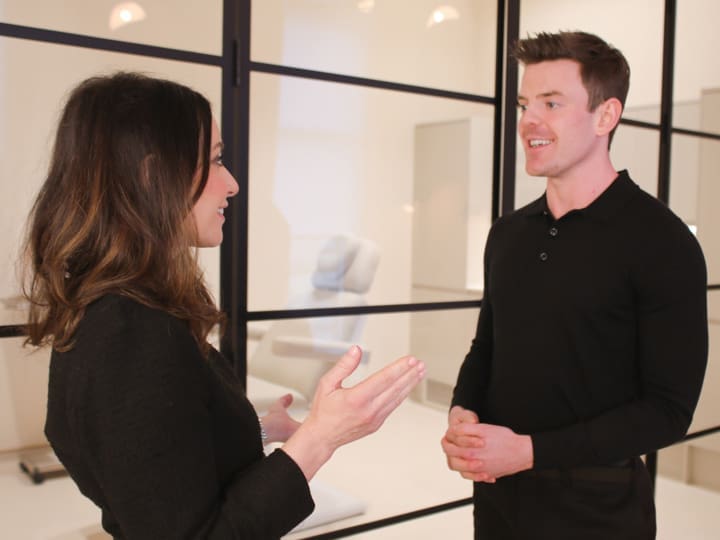
We understand how frustrating it can be to feel dismissed or rushed through the healthcare system. At McKeown Medical, we take a different approach. Led by Dr Iain Martin, a consultant gynaecologist, our clinic offers thorough diagnostic assessments and personalised treatment plans.
Whether you need advanced imaging, diagnostic hysteroscopy, or are exploring your options for NovaSure®, our goal is to help you get answers and relief with compassion, clarity, and expert care.
Don’t just settle for one type of treatment for your heavy or painful periods. At McKeown Medical, our experts can help investigate the cause of your concerns and offer a range of treatments tailored to your specific needs. Book a consultation to talk with our team today.
1 / 3
2 / 3
3 / 3
Upper eyelid surgery isn’t just for ageing eyes! Some patients naturally have excess upper eyelid skin from a young age due to their anatomy, like this 29-year-old patient who had a congenital upper eyelid fold and recently underwent an upper blepharoplasty with the ever-talented @bramhallplasticsurgery.
The excess eyelid skin rested directly on her eyelashes, causing irritation and a persistent feeling of heaviness around the eyes which had been bothering her for several years. Upper eyelid surgery can address both functional symptoms and aesthetic concerns, helping patients achieve a lighter, more open eye appearance.
This patient is just 7 weeks after surgery. At this early stage of healing the scars are still maturing and in younger patients this process can take slightly longer. The incision is placed within the natural eyelid crease and as healing progresses the scar typically fades and becomes extremely difficult to see, often blending into the natural eyelid fold.
She`s delighted with the results so far, and we`re grateful to her for allowing us to share her results with you.
What do you think?

Thank you once again to another lovely patient who has allowed us to share her photos with you.
She came to see me wanting a refresh and was open to suggestions, surgical and non-surgical. Her biggest concern however was wrinkles and lines and skin texture problems.
Surgery doesn’t help with this and injectables are limited too - the gold standard here is laser resurfacing, which is what we went with. We did a full field ablation of the full face including her eyelids.
This is her a month or so later. You can see she is still a bit red, especially around the eyes where we went the deepest, but she is already loving life with her new skin.
What do you think?
The non-surgical facelift!
You might have heard us talking a lot recently about combination treatments, using different treatment modalities to create synergy in non-surgical rejuvenation. The reason this works so well is that the different layers of the face age in different ways.
We focus a lot on skin tightening, which is super important, but that’s only the outer layer of the face. Below that the fat, bone and muscle are all changing too.
This lovely lady was relatively new to aesthetics and wanted a more comprehensive rejuvenation without surgery. We decided to do the combination approach using @sofwave.uk to tighten the skin of the face and neck, whilst using HA to restore volume to the fat and bone.
This is her a few months later - her whole face looks tighter, softer, less tired - but in a way that looks completely natural. She is delighted with the result that still looks like her, just a really refreshed version.
What do you think?
HA Fillers are making a comeback! Here are my thoughts on the how and why 👀
How long does a facelift last? One of the most common questions we hear, but it doesn’t have a straightforward answer. Here is our facelift expert @bramhallplasticsurgery talking about some of the nuance.
I’ve been getting lots of questions about what I’ve been up to with my own skin recently. So here you are… the full uncensored version 👀
Introducing Julaine - a new biostimulator I am very excited about!
To explain the background, we need to start with Sculptra - which is having a bit of a moment again on socials. Sculptra is made of PLLA which stimulates your own body to create more collagen, which sounds instantly appealing especially for patients who want to avoid HA fillers.
The problem is that 1 in 5 people who have Sculptra develop nodules which is why - despite the beautiful results we often see from it - I have never used it in my practice (at least not in the face). The trade off in terms of the risk of nodules is just too high for me to feel comfortable with.
We now have a new version, called Julaine, made from a Swedish company called Nordberg. The scientists at Nordberg have refined the manufacturing process to make the PLLA particles smaller and smoother and in doing so have eliminated the problems associated with Sculptra.
I have only just recently started working with Julaine (it’s been around for a couple of years now, but I never like to be the first to use it - I always want to make sure the real world data matches up to what the pharma companies tell us). The treatment is delivered over three sessions, one month apart, with gradual tissue regeneration and volumising occurring slowly over time.
The course of 3 sessions costs £3000 and results typically last up to 2 years. It’s a great addition for other regenerative treatments like Sofwave skin tightening. It’s also great for patients who’ve had HA fillers and feel like they need something else, but aren’t quite ready for more HA yet.
What do you think?
One of Dr Kavita’s breast reduction patients sent this gorgeous bouquet of flowers after her follow up - simply because she felt so grateful for her result and the care our team provided.
Moments like this remind us why we do what we do and why ‘how’ we do it is so important. Surgery has traditionally been a very male-dominated world, but Kavita brings something different - exceptional technical skill combined with empathy, warmth and a genuine understanding of women’s bodies and aesthetics.
There can be a lot of pressure on women in surgery to abandon their femininity to fit in. Kavita hasn’t done that. She’s succeeded by being completely herself.
And that’s exactly why our patients love her (and why we do too).
We’re very proud to have her as part of the McKeown Medical team.
This patient came to the clinic thinking she needed a facelift to get what she wanted. We do facelifts - lots of them. But for this patient, her biggest issue wasn’t loose skin.
It was skin quality, which is something we see a lot of, so we suggested she fix that first. This is the result. Fully ablative resurfacing isn’t easy, but for the right patient, it can be life-changing.
The patient is delighted with her results. What do you think?
When you first make contact with us you will be assigned your own personal Patient Relationship Manager. They’ll start by understanding your needs and liaising with our doctors to book you an appointment with the most suitable specialist. For any additional questions or needs, you can message or call them anytime and they’ll be delighted to assist you. Our entire team is dedicated to providing you with the best possible treatment and care tailored to your needs.
Keep up to date with the latest news from McKeown Medical and get access to expert insights, our latest before and afters and exclusive offers.


McKeown Medical
167 Bath Street, Glasgow, G2 4SQ
Copyright 2026 © Dr Darren McKeown - Cosmetic Surgery Clinic, Glasgow