McKeown Medical
167 Bath Street, Glasgow, G2 4SQ
McKeown Medical
167 Bath Street, Glasgow, G2 4SQ





Discover what ‘True Skin Age’ means, how it’s measured using VISIA, and the evidence-based ways to improve your biological skin age.

Published by Dr Darren McKeown
Date posted — 2.02.26
It is common for patients to know their chronological age — but very few know their biological skin age. In aesthetic medicine, these two numbers often don’t match.
Thanks to modern imaging systems like VISIA®, we can now estimate ‘True Skin Age’ — a measure of how your skin is ageing relative to people of the same age and skin type.
Patients find this incredibly useful because it provides:
A baseline
A motivation marker
A treatment response tracker
An objective way to measure improvement
In this article, we break down what ‘True Skin Age’ means and how to lower it over time.
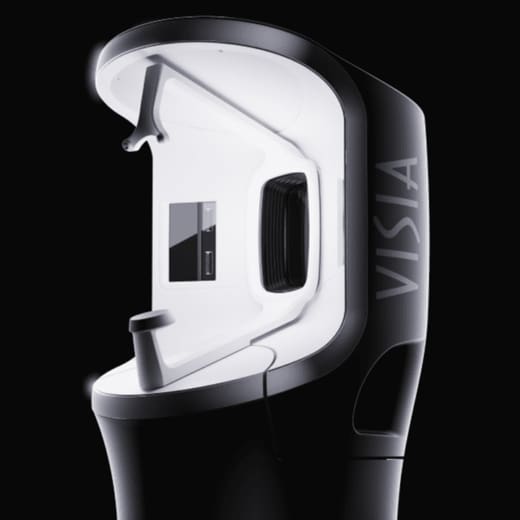
‘True Skin Age’ is a data-driven score generated by VISIA that compares your skin to a large global database of individuals of the same gender and age group. It takes into account markers such as:
UV damage
Pigmentation
Redness
Texture and pores
Collagen-related ageing
Porphyrins/bacteria
Fine lines and wrinkles
This score can be:
Younger than your chronological age
Equal to your chronological age
Older than your chronological age
Patients instantly grasp the concept — and are motivated to improve it.
Several external and internal factors accelerate skin ageing:
Sun and blue light drive:
Pigmentation
Collagen breakdown
Vascular damage
Actinic changes
This is the biggest modifiable determinant of skin age.
Both increase oxidative stress and impair circulation.
Oestrogen decline, thyroid disorders and diabetes can all alter skin physiology.
Chronic inflammation accelerates collagen loss and pigment formation.
Some individuals simply age slower or faster due to inherent biology.
Sleep, stress, alcohol and nutrition meaningfully influence:
Hydration
Barrier integrity
Collagen turnover
Understanding these drivers helps patients prioritise interventions.

The VISIA system uses:
Multispectral imaging
RBX® technology for pigment/redness isolation
UV photography
Texture mapping
Pore analysis
Comparative population data
The software then assigns a biological skin age relative to peers.
This forms a baseline, enabling patients to measure change over time.
Here are the most evidence-based strategies:
UV drives pigmentation, redness, and collagen breakdown — so improving UV-related markers makes skin appear younger.
This may involve:
Pigmentation laser (for brown spots)
Vascular laser (for redness)
IPL/BBL (for photoageing)
Antioxidant serums (to reduce oxidative stress)
Broad spectrum SPF (daily)
Collagen density strongly influences biological skin age.
Clinically effective ways to stimulate collagen include:
Fractional resurfacing lasers
Non-ablative collagen-stimulating lasers
Full resurfacing lasers
Retinoids (topically)
Peptides (supporting mechanism)
VISIA’s wrinkle/texture metrics are particularly responsive to collagen treatments.
Uneven pigmentation adds years to perceived age. Strategies include:
Hydroquinone (short-term cycles if appropriate)
Tranexamic acid (melasma/PIH)
Laser/light therapy
Topical retinoids
Barrier repair for inflammation-driven PIH
Pigment reduction is one of the fastest ways to make skin look younger.
Diffuse redness is strongly associated with inflammatory ageing.
Vascular improvements typically involve:
Vascular lasers
IPL/BBL
Anti-inflammatory skincare
Trigger management (alcohol, heat, sun, stress)
Reducing redness improves clarity and uniformity — two strong youth markers.
Maintenance therapy matters. Important categories include:
Retinoids (cell turnover & collagen)
Vitamin C (antioxidant support)
Niacinamide (barrier & pigment suppression)
Peptides (signalling pathways)
Sunscreen (non-negotiable)
This protects investment in clinical treatments.
The real power of measuring skin age is proof of change.
Patients who re-test after 3–12 months typically see measurable improvements in:
UV damage scores
Pigment evenness
Redness
Texture
Biological age
This creates a gratifying feedback loop that sustains motivation.
‘True Skin Age’ gives patients a meaningful framework for understanding their skin’s health and ageing trajectory. By combining objective measurement with targeted clinical treatments and sensible skincare, it is possible not just to look younger — but to biologically age slower at the level of the skin.
To book your VISIA skin assessment, call us on 0141 570 0309 or complete our simple online consultation.
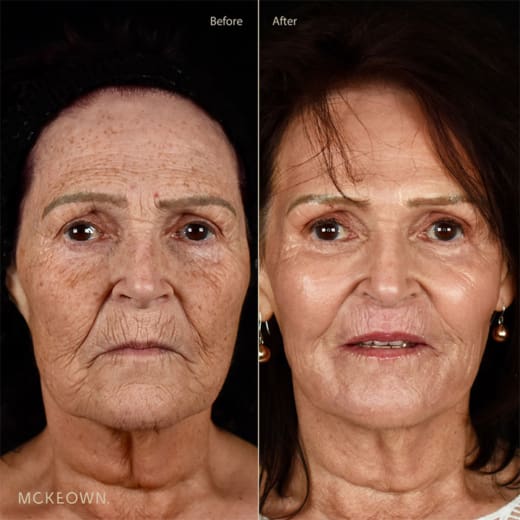
Skin quality is the missing piece in aesthetic medicine. Discover why tone, texture and clarity matter—and how lasers and VISIA...
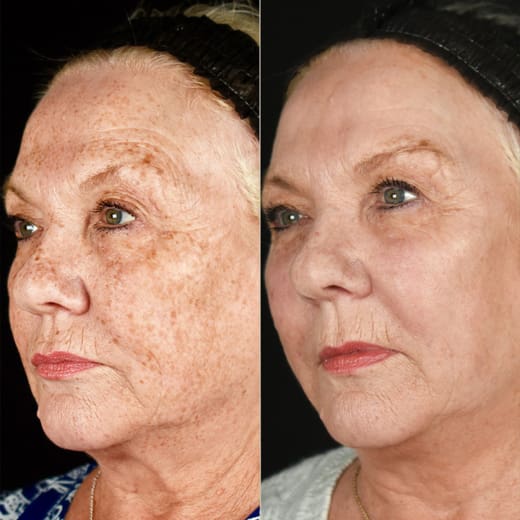
Pigmentation, redness and texture issues all have different causes. Learn what’s happening beneath the skin, and why VISIA analysis helps...
1 / 2
2 / 2
Skin quality is the missing piece in aesthetic medicine. Discover why tone, texture and clarity matter—and how lasers and VISIA...
Pigmentation, redness and texture issues all have different causes. Learn what’s happening beneath the skin, and why VISIA analysis helps...
This patient came to the clinic thinking she needed a facelift to get what she wanted. We do facelifts - lots of them. But for this patient, her biggest issue wasn’t loose skin.
It was skin quality, which is something we see a lot of, so we suggested she fix that first. This is the result. Fully ablative resurfacing isn’t easy, but for the right patient, it can be life-changing.
The patient is delighted with her results. What do you think?

Another gorgeous result for another gorgeous patient by the very talented @bramhallplasticsurgery.
This patient is 2 months post-op and loving life with her new eyelids. As well as looking better, she can see better because the weight of the excess skin has been removed. The patient is delighted.
What do you think?
Last week marked a huge milestone for us at McKeown Medical.
Our first full lists of major surgical procedures - something we’ve been carefully building towards for several years - and I couldn’t be prouder of this team.
Led by Dr Kavita, we treated patients for breast augmentation (using both implants and fat transfer), breast reduction, uplift surgery and intimate female procedures, with every case approached thoughtfully, calmly and with meticulous care.
What meant the most to me wasn’t just the surgery itself - it was the experience our patients had.
Thanks to Dr Rob and his modern anaesthetic techniques, patients were comfortable, clear-headed and walking around within an hour of surgery - no nausea, no vomiting, just smooth recoveries.
Our wonderful nursing team cared for everyone before and after, and Lorraine kept the entire day running like clockwork behind the scenes.
Moments like this remind me why we’ve taken our time to grow these services properly. We could have rushed this process, but we’ve taken our time to get it right. I never wanted to simply add surgery to the clinic - I wanted to rethink how patients experience the surgical process.
We’re only just getting started, and I’m incredibly excited about what this means for the patients across Scotland and beyond who choose to trust us with their care.
As all of our patients know, the neck is the one part of the anatomy we always struggle to treat without surgery.
This patient underwent CoolSculpting to reduce some of the excess fatty tissue under her chin, followed by @sofwave.uk to tighten the skin. This is still early days for her, but we can see she is already well on her way to a great result.
When it comes to the neck, combination treatments are usually the answer to the best results.
What do you think?
We have an exciting new addition to the clinic - Visia skin analysis.
We’ve had a growing focus in the clinic on skin quality and skin health over the years with more and more investment in lasers and devices that improve skin quality as the foundation of what we do in aesthetic medicine.
The Visia is a great tool for helping us to analyse the skin and track progress of treatments over time. As well as doing a thorough analysis of all the components of sun damage and skin health, it also gives us an estimate of our ’true age’, which is a reflection of the condition of our skin compared with average for our age.
This is one of my own analysis images. It got my ’true age’ pretty much spot on with my chronological age, which is perhaps surprising given that I spent most of the 90s lying under a sun bed. What was interesting is that I scored really well on superficial pigment and redness, which is consistent with the fact that I love BBL and have a treatment a few times per year. I scored less well on deeper pigment and texture issues, which I guess is consistent with the fact that I’ve not had a Halo laser for nearly 4 years now. So I guess I will be booking another Halo for myself very soon!!!
We`re offering the Visia skin analysis free as part of our laser consultation process. If you`re interested in laser treatment, come in for a consultation with Dr Sharon and you’ll have your analysis done as part of planning your treatment strategy.
You’ll also be scanned again after your course of treatment so we can track your progress.
What do you think of this new addition to the practice?
I am very humbled to share these incredible reviews from our patients.
We are very fortunate to have a team who LOVE their work and will always go the extra mile to ensure our incredible patients are properly taken care of at every step of their journey with us.
We couldn’t do what we do without our incredible (and growing!) team and I am so proud of every one of them.
We have some very exciting developments on the horizon, so keep watching this space!
Laser eye rejuvenation! Thank you to our lovely patient for allowing us to share her photos, just one week after her laser eyelid rejuvenation.
Crepe skin, loose skin, wrinkles are all common signs of ageing around the eye which do not respond well to surgery. The optimal treatment for these problems is laser resurfacing - which is exactly what this patient had.
We’ve been performing these treatments in the clinic for several years, although I’ve recently modified the technique to achieve incredible results with less downtime.
What do you think?
Here’s another fantastic result from our phenomenally talented plastic surgeon, @bramhallplasticsurgery .
As we age, the eyebrows naturally descend which allows excess skin to fall into the upper eyelids. The two main surgical options to address this are a brow lift, an upper eyelid lift (upper blepharoplasty) or both, but for many patients the most appropriate option is also the simplest: to leave the brows exactly where they are and address the excess skin at the eyelids alone.
Upper blepharoplasty is a straightforward procedure with scars hidden in the natural eyelid crease, making them very hard to see once healed. Brow lifts are usually more involved, often require a general anaesthetic, and tend to create a more noticeable change to the face.
The aim with upper eyelid surgery is subtle improvement - looking fresher and more rested, without it being obvious that you’ve had anything done.
This 42-year-old gentleman had a bilateral upper blepharoplasty under local anaesthetic and is shown here six months after surgery.
What do you think?
With darker evenings and fewer social engagements, January is a great time to think about treatments which benefit from a little down time or those that will deliver their best results by spring.
Here’s Dr Darren with his top recommendations for treatments to have over the winter months, including Sofwave, HALO, full-field resurfacing and varicose vein treatment, all of which will deliver beautiful results in time for the weather getting better and social calendars filling up!
Which treatments are you planning?
When you first make contact with us you will be assigned your own personal Patient Relationship Manager. They’ll start by understanding your needs and liaising with our doctors to book you an appointment with the most suitable specialist. For any additional questions or needs, you can message or call them anytime and they’ll be delighted to assist you. Our entire team is dedicated to providing you with the best possible treatment and care tailored to your needs.
Keep up to date with the latest news from McKeown Medical and get access to expert insights, our latest before and afters and exclusive offers.


McKeown Medical
167 Bath Street, Glasgow, G2 4SQ
Copyright 2026 © Dr Darren McKeown - Cosmetic Surgery Clinic, Glasgow


